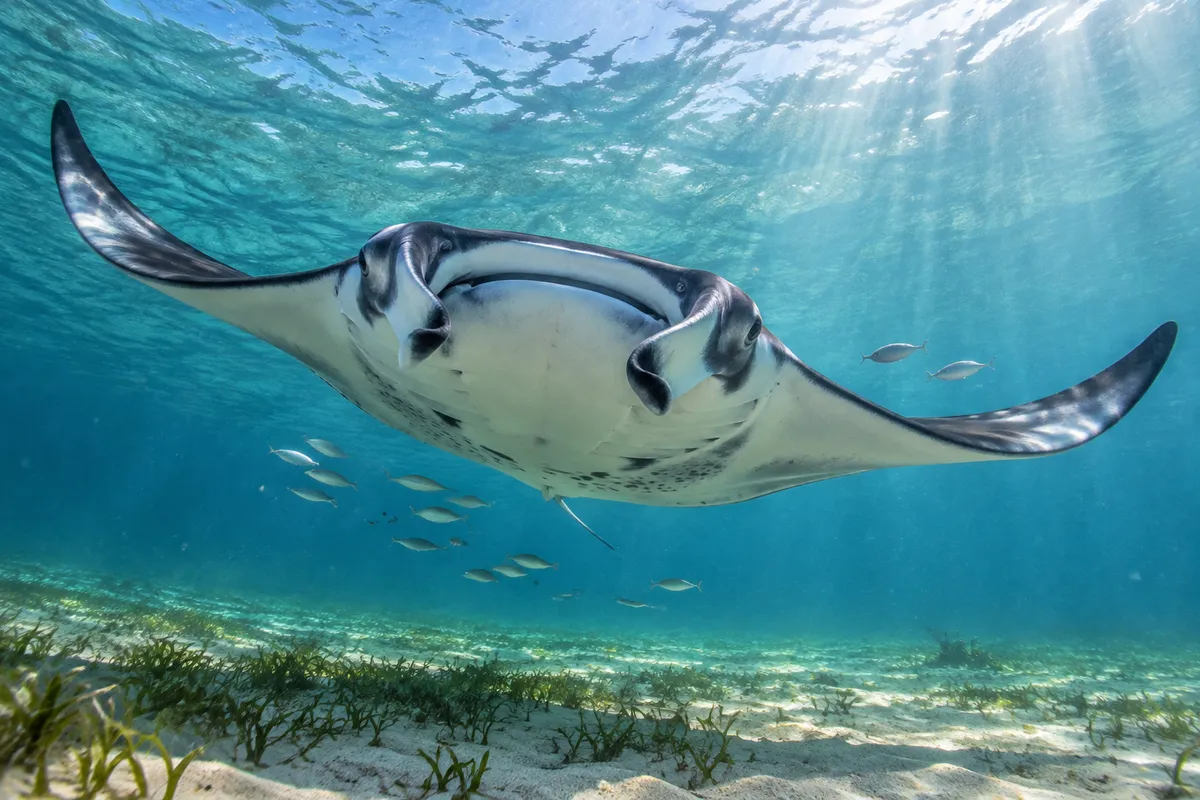
A giant manta ray can grow up to 30 feet long and 4,409 pounds. But every one of them starts small, and a new study explains where the youngest ones hide while they grow: in shallow coastal water, close to shore, away from the hunting grounds of sharks and orcas.
By the end of this piece, you'll know how researchers worked this out, why a baby manta's address changes as it ages, and why that matters for protecting the species.
The study, published in the journal Frontiers in Fish Science and reported by Popular Science, followed giant manta rays (Mobula birostris) in Central America.
Size is the whole survival strategy
Adult mantas have two big defenses. According to study co-author Jeffry Madrigal-Mesén, project leader of Mantas Costa Rica, mature adults "can rely on their massive body size and their ability to dive deep to evade threats."
Pups don't have either option. In the open ocean, they would face orcas (Orcinus orca) and numerous sharks without the bulk to discourage them. So they use geography instead of muscle.
The researchers describe young mantas, meaning those with a body about 10 feet or less, as staying in shallow coastal refuges. These spots don't overlap with predators' hunting grounds. Think of it as a nursery that works because the dangerous animals simply aren't hanging around.
What the shallows offer
Safety isn't the only draw. According to the study's findings as reported, the pups also get:
- Plenty of food to fuel growth
- Places to hide
- Cleaning services from reefs
That last one is easy to overlook. Cleaning stations, where small animals pick parasites and debris off larger ones, turn out to matter at every life stage.
Madrigal-Mesén said he was struck by how strictly the young rays stick to coastal waters. "We see the same individuals more often than once a year," he said. Some were recently seen again at the exact spot where they were first tagged.
How researchers pieced it together
Between 2018 and 2025, the team tracked and identified mantas at five locations using three methods:
- Acoustic telemetry, which uses underwater sound pulses to monitor movements. It tracked 59 individual rays.
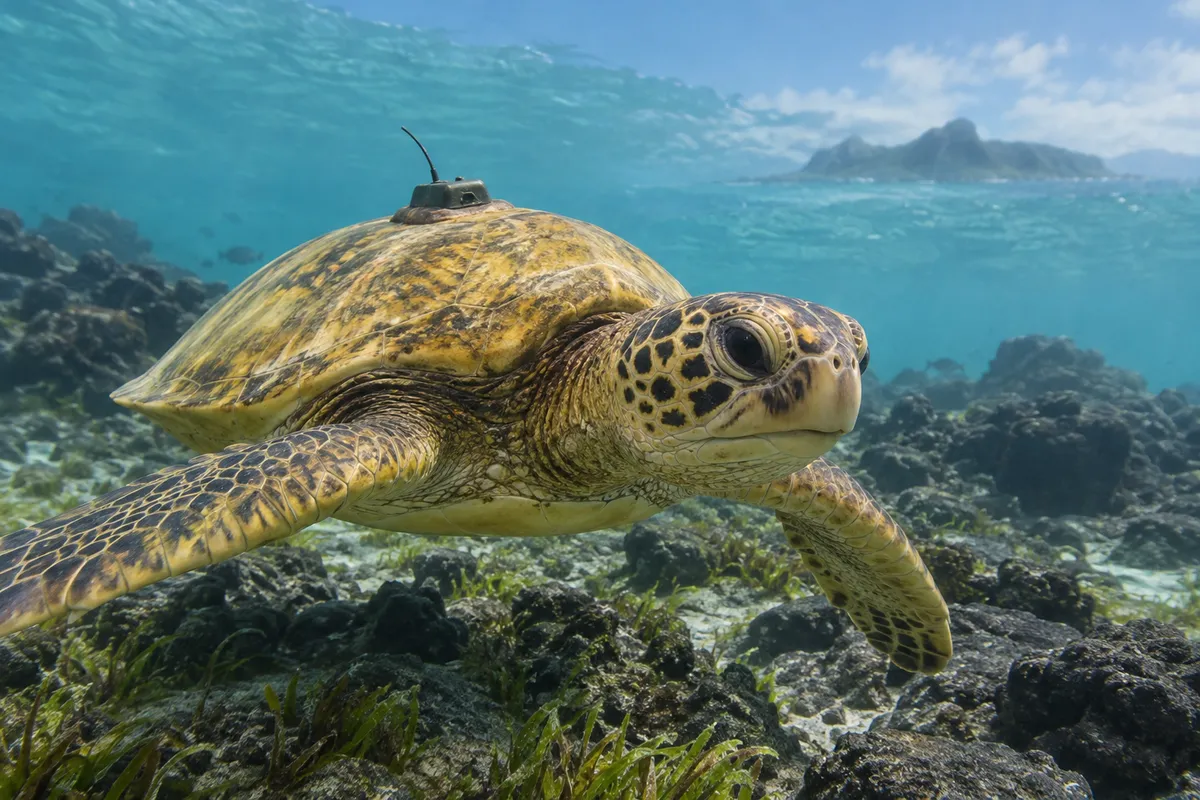
- Satellite telemetry, where transmitters report movement and behavior from a distance. It followed large-scale movements of 12 individuals.
- Photo identification, which recognizes individual rays.
Together they produced a dataset of more than 12,000 detections. "If we hadn't used all three technologies together, we simply wouldn't have been able to piece this puzzle together," Madrigal-Mesén said.
It's a useful reminder of how marine science often works: no single tool shows the whole animal, but overlapping tools can.
Adulthood means leaving home
The story changes as mantas mature. Nine mature mantas in the study made expansive migrations along the continental shelf break. Madrigal-Mesén summarized the shift: "Juveniles remained strictly within shallow nearshore waters that serve as coastal refuges, but most of the tracked adults executed long-distance transboundary migrations along the continental shelf break into Central America."
In other words, a manta's lifestyle isn't one-size-fits-all. Where it lives depends on how big it is.
Even migrants come back
One manta, nicknamed Mickey Mouse for a spot pattern on his belly, showed that adults can stay loyal to a site too. He was unusually approachable for a manta and let the team tag him several times over several years, which gave them a continuous record. In 2020 he logged 462 acoustic detections at a coastal hub called El Secreto. He returned to the same shelf in 2023 and stayed 38 days.
Madrigal-Mesén said nearshore cleaning stations do more than keep rays tidy: "they act as primary social hubs where courtship and reproductive interactions take place." Returning to a predictable coastal spot lets mature rays handle social and cleaning needs before long regional migrations.
The risk after the nursery
The safe childhood has a catch. Coastal areas are often legally protected marine reserves, but the open ocean is another story. Once adult mantas leave, they lose that legal protection and are exposed to industrial fisheries and vessel strikes, per the study team.
The researchers conclude that marine protected areas alone aren't enough for such a mobile species as it crosses Central America. Their proposed fix is multi-national "conservation swimways": linked protections that connect the juvenile coastal refuges with adult migratory corridors. The rays are endangered, so the gap in protection matters.
The takeaway is a broader one about protecting animals that move. A reserve that guards only one stage of life can leave the rest exposed, so a protection plan has to follow the whole route.
What you can take from this
If you snorkel, dive, or visit coastal areas in manta country, the shallows you're enjoying may be someone's nursery. Choose operators who keep a respectful distance, and support groups that push for protections that cross borders, not just coastlines. The researchers hope their work inspires new collaborators, and the same logic applies to the rest of us: pay attention to where young animals live, because that's where a species' future starts.