Sea turtles have a reputation as ocean-crossing wanderers. Here is a better one to carry around: some of them simply stay home, and knowing that changes how we think about protecting them.
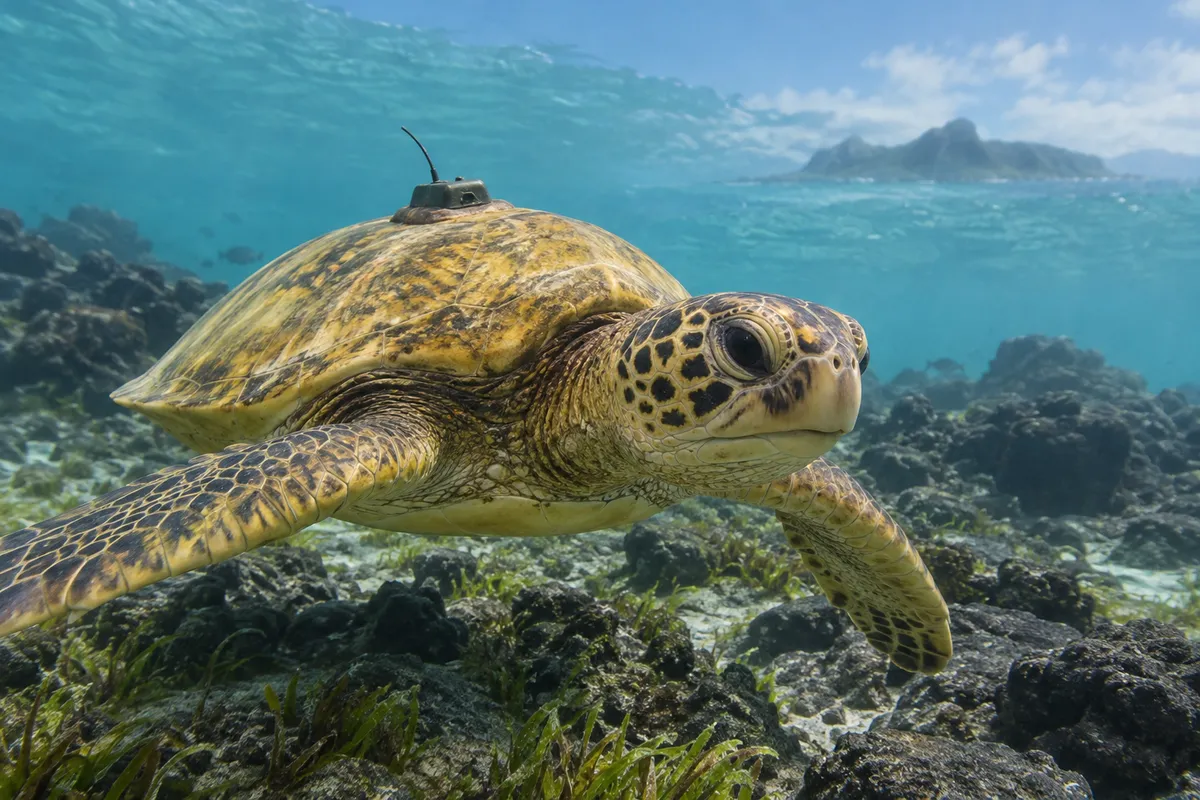
Per a report from Phys, scientists tracked yellow-morph green sea turtles in the Galápagos and found they stayed within the marine reserve rather than migrating long distances, as researchers expected. By the end of this article, you will understand why that surprised scientists, how tracking reveals this kind of hidden behavior, and why a homebody turtle needs a different kind of protection than a globe-trotter.
Why scientists expected these turtles to roam
Phys describes sea turtles as prodigious wanderers. Guided by Earth's magnetic field, ocean currents and the sun, they tend to crisscross the seas in search of food, returning to the region of their birth. That is the picture most of us hold: a turtle as a long-haul navigator with a built-in compass.
So when researchers followed the yellow-morph green turtles of the Galápagos, the natural assumption was that they would head out across open ocean at some point. They did not.
What the tracking found
According to the study as summarized by Phys, the tracked turtles stayed inside the Galápagos Marine Reserve. Instead of leaving for distant feeding grounds, they appear to use shallow coastal habitats and routes between islands, and they use them more locally than researchers assumed.
That is the whole surprise in one sentence: an animal famous for epic journeys, living out much of its life in one archipelago's waters.
What "yellow morph" means
The turtles in question are a yellow-morph form of the green sea turtle, a population distinguished from the black green turtles also found in the region. The coverage I have points to distinct morphs with distinct movement patterns, which is part of why this finding matters. I can't tell you more than that about how the two forms differ, and it would be a mistake to assume that what is true of one is true of the other.
How tracking reveals secret animal lives
You can't watch a turtle for years from a boat. Tracking tags, attached to animals and reporting their positions, let scientists see where an individual actually goes rather than where its species is supposed to go. The result here is a good example of why that matters: the reputation of a species can hide the habits of a particular population.
If you want a quick takeaway about animal science, it is this: "typical for the species" is a starting guess, not a finding.
Why a homebody turtle needs local protection
A turtle that migrates across oceans passes through many jurisdictions, fishing grounds and shipping lanes. Protecting it means cooperation across borders. A turtle that stays put depends heavily on specific local habitat: the shallow coastal areas and inter-island routes it uses day after day.
Phys notes that marine reserves face pressure from fishing, tourism, climate shifts and coastal degradation. For a resident population, damage to a few key places could matter more than damage spread thinly across the sea. That is my reading of the finding, not a conclusion stated by the researchers, but it follows naturally from the idea that these turtles lean on nearby habitat.
The finding also complicates assumptions about sea turtle conservation more broadly, especially for populations with distinct morphs and movement patterns. One conservation plan built around a typical migratory turtle may not fit a population that never leaves.
How to use this idea
You don't need to be a marine biologist to take something from this.
- Question the famous version of a story. The well-known trait of a species may not describe every group within it.
- Look local. Reserves, coastlines and shallow waters near you may matter enormously to animals you assume are just passing through.
- Notice the difference between protecting a species and protecting a population. The Galápagos turtles are a reminder that the second is often more specific than we think.
The takeaway
Next time you hear that an animal "migrates thousands of miles," ask which animals, from where. Then, if you live near coastal habitat, find out what protects it. For some turtles, home is the whole story.