If you've ever wondered what the glamorous-sounding job of "searching for a lost aircraft" looks like on the ground, here's one answer: you spend a lot of time thinking about crabs. By the end of this article you'll know what's drawing researchers to a remote Pacific island, what coconut crabs are, and why they've become part of the expedition's logistics.
What's happening on Nikumaroro
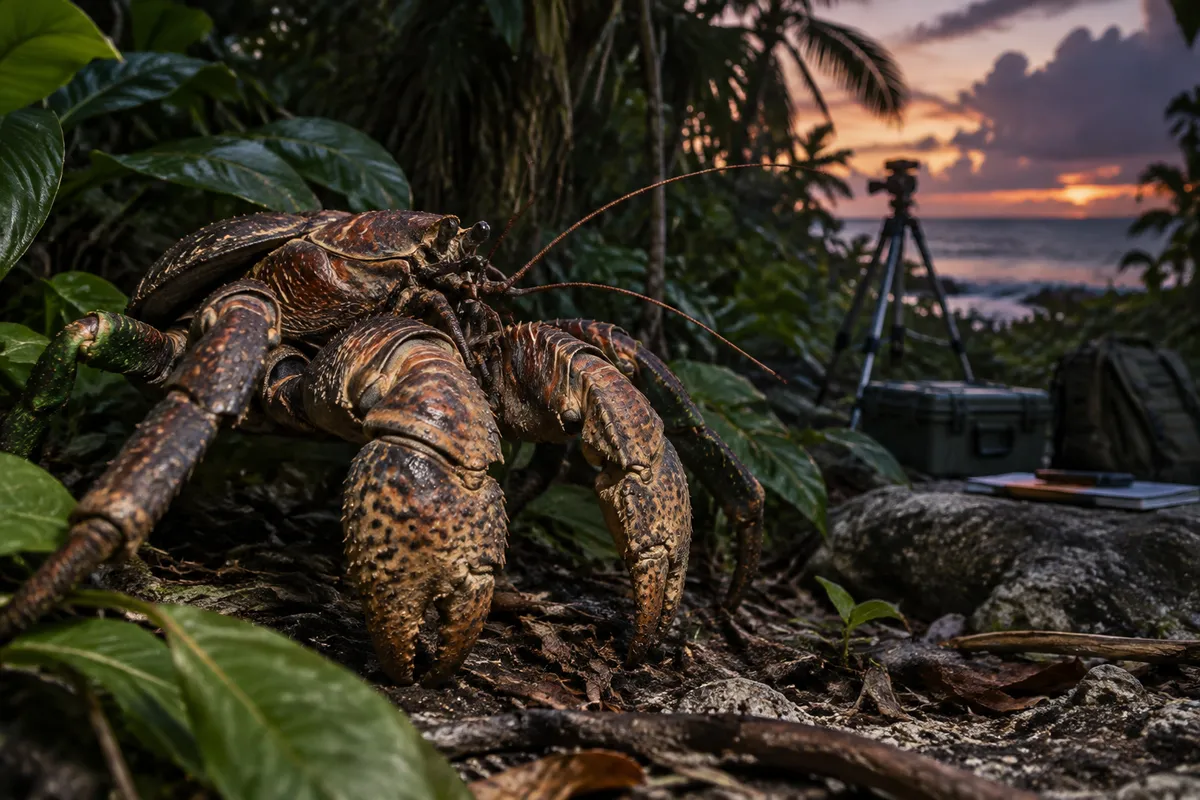
Per a Fox News report, a Purdue University-led expedition is searching Nikumaroro Island for clues to the fate of Amelia Earhart's Lockheed Electra. While clearing trails, the team has run into massive coconut crabs, which have complicated the work.
The expedition is also investigating a satellite anomaly tied to the Earhart mystery, which gives the trip a specific lead to chase rather than a general hope of stumbling on something.
Why the crabs are a real problem
According to the report, three traits of the crabs have shaped how the team plans its work:
- Size. These are described as giant crabs, far larger than what most people picture when they hear the word.
- Nocturnal behavior. The crabs are active at night, which affects when and how people move around the island and how camp is organized.
- Powerful claws. The report highlights their crushing grip, which is the reason a trail-clearing crew takes them seriously.
The practical lesson is simple: on a remote island, wildlife isn't scenery. It's a scheduling factor, a safety factor, and a gear-packing factor.
What a coconut crab actually is
The coverage describes them as meat-eating crabs, which surprises people who assume the name means a coconut-only diet. Beyond what the report states about their size, night activity and grip, this article won't guess at precise measurements or numbers. If you want exact figures, such as weight or claw strength, check a zoological source rather than trusting a viral headline.
Why Nikumaroro keeps pulling in investigators
The Earhart disappearance remains one of history's most enduring aviation mysteries. Nikumaroro keeps attracting search teams, and this expedition's focus on a possible new clue, the satellite anomaly, gives it fresh purpose. A mystery this old survives because every new lead is cheap to hope for and expensive to check, and the expense here includes dealing with the island itself.
The unglamorous side of exploration
The story is shareable because it clashes two ideas: the romance of a famous aviation mystery and the plain reality of fieldwork. Trails have to be cleared. Animals have to be worked around. Time on the island is limited, and night is when the crabs are out.
That contrast is worth keeping in mind whenever you read about expeditions. The headline moment, such as finding a piece of an aircraft, is rare. The daily work is logistics.
What to watch for next
The report doesn't say the crabs have stopped the search, only that they've complicated it. As Purdue's team follows up on the satellite anomaly, the real questions are whether the lead pans out and how the team's methods adapt to the island. Treat any claim of a definitive answer with patience until the researchers themselves confirm findings.
The takeaway
Next time you read about a dramatic discovery, look for the sentence about how the team got there. The details about crabs, trails and nighttime schedules are often the most honest part of the story.