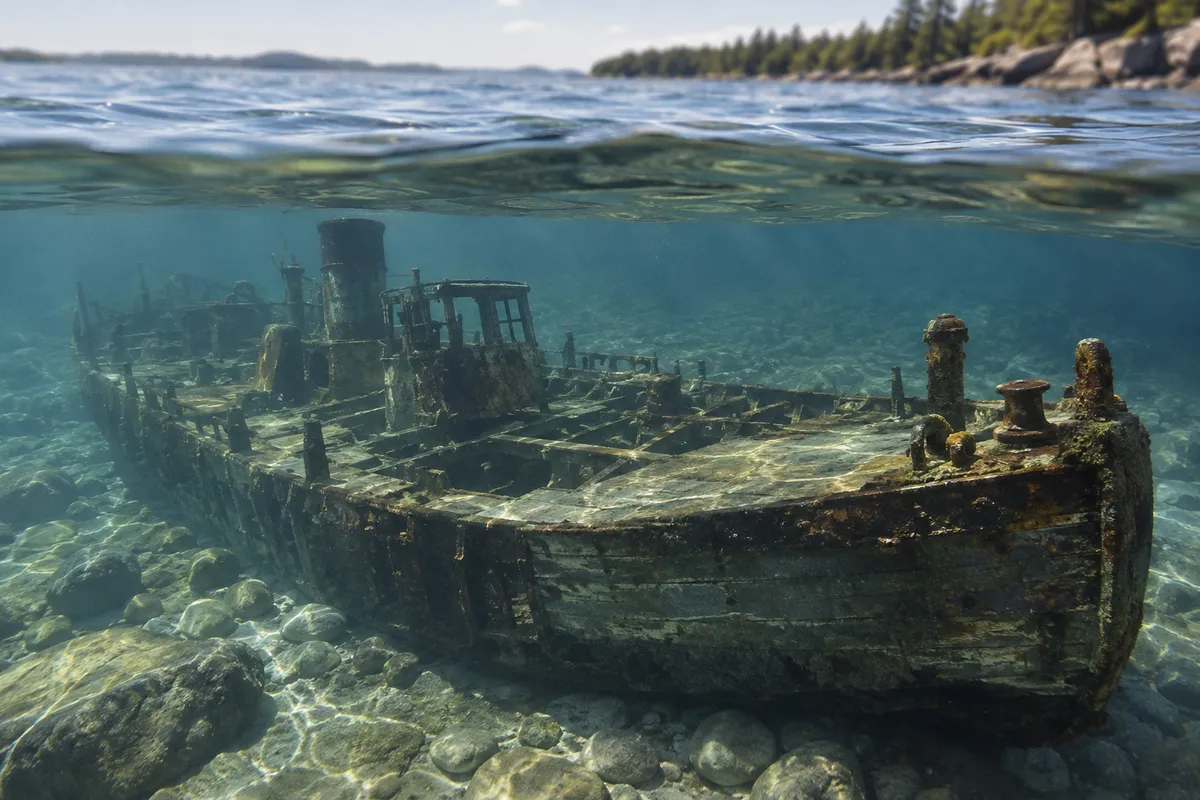
A Wisconsin mother and her son were looking into unusually clear Lake Superior water when they noticed something that didn't belong: the submerged outline of a boat. It was the remains of the A.H. Pitz, a steam-powered tugboat from 1923, according to Fox News. By the end of this piece, you'll know what we can say about the find, why clear water can turn a familiar beach into a window on the past, and how to look at your own local shoreline with sharper eyes.
What happened at the beach
Per Fox News, the wreck of the A.H. Pitz became visible after Lake Superior's water turned unusually clear. Video of the find shows the submerged remains of the century-old tugboat. The report describes the discovery as being made by a Wisconsin camp director, and the headline captures the moment of realization with the phrase "Wait a minute."
The detail that makes the story stick is that the site was a beach people had visited for years. The wreck was not new. What changed was the visibility.
The coverage I have doesn't go into further detail about the vessel's history, its exact location, or what happens to the site next, so I won't guess at those. What's established is the boat's name, its 1923 build, its steam-powered tugboat identity, and the clear-water conditions that revealed it.
Why clear water changes what you can see
The lesson here is simple: the same spot can look completely different depending on conditions. When water is murky, a wreck just below the surface can pass for shadow, rock, or lake bottom. When the water clears, the shapes become readable.
That's the appeal of this kind of "accidental discovery" story. Nobody mounted an expedition. Someone was paying attention on a day when the lake offered a better view, and noticed that something looked wrong in the best way.
How to spot hidden history near you
You don't need a Great Lake to try this. A few habits make you more likely to notice what's been sitting in plain sight.
Go back when conditions change
Visit the same shoreline, creek, or pond at different times. Calm, bright days with little wind tend to give you the best look below the surface. Different seasons and water levels can show you different things.
Look for straight lines and odd shapes
Natural lakebeds are mostly irregular. Long straight edges, regular curves, or repeating patterns are worth a second look. That is the kind of mismatch that makes someone say "wait a minute."
Use polarized sunglasses
Polarized lenses cut glare on the water's surface, which helps you see further down on a sunny day. It's a cheap, practical way to improve your view.
Take photos and video
If you spot something, record it from a safe spot on shore. Video helped bring this tugboat to wider attention, and it gives you something concrete to show others.
Ask before you assume
A local historical society, library, or park office may already know about what you've found, or may be glad to learn about it. Shipwrecks and submerged sites can also be protected by rules in some places, so check locally before touching or removing anything. Look, photograph, and leave it as you found it.
Why these stories land
It's easy to see why this one traveled online. It combines a family moment, a century of history, and the idea that the past is just under the surface of places we think we know. Most of us have a beach, trail, or street corner we've passed a hundred times without really looking.
The A.H. Pitz didn't change. The water did, and a person happened to be looking.
The takeaway
Pick one familiar place near you this week, go on a bright, calm day, and spend ten minutes just looking down into the water. You may not find a tugboat, but you'll see the place differently.