Walk into a tomb packed with bodies from different centuries and the natural assumption is that things fell apart: later burials shoved in wherever they fit, earlier ones ignored. A new study of one tomb near Luxor argues that reading is wrong. By the end of this article, you'll have a better way to look at a crowded burial space, and a sense of why archaeologists now see careful planning where they once saw clutter.
What the study looked at
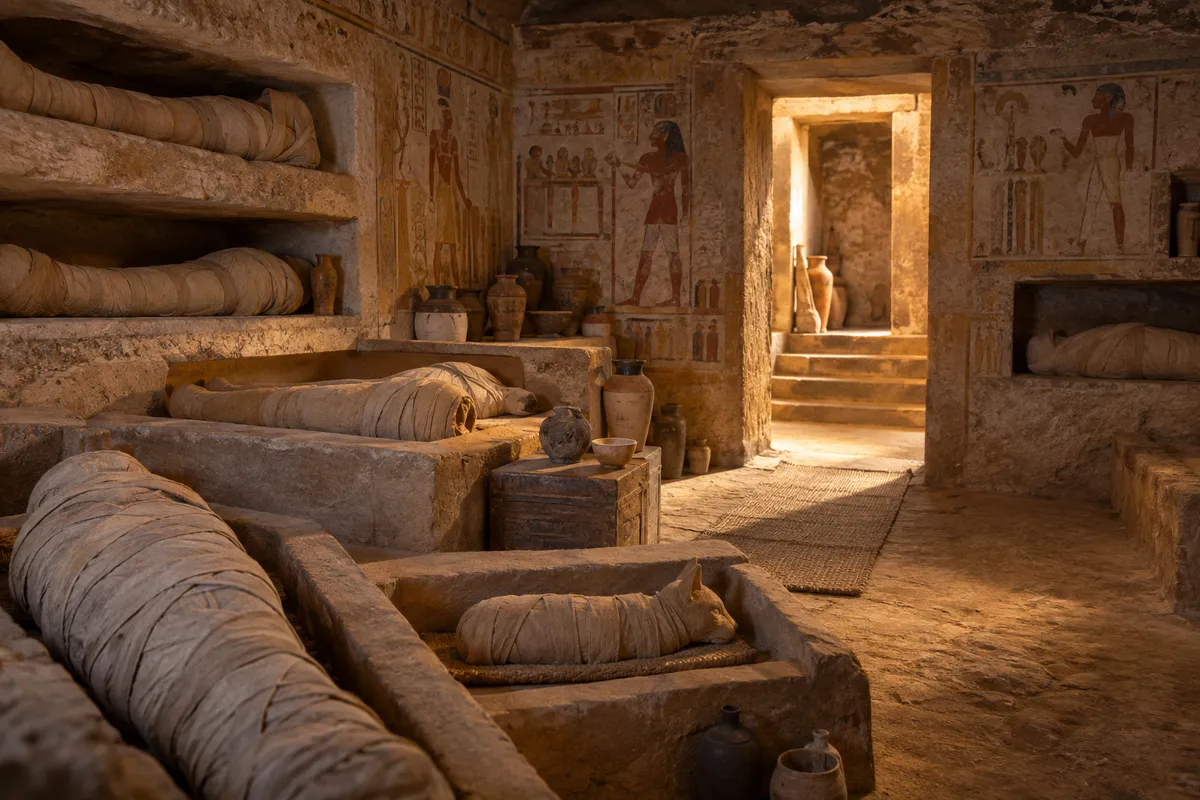
Per a report on Phys, researchers examined Theban Tomb 209, near Luxor, a single burial chamber that was reused from the Twenty-fifth Dynasty through the Ptolemaic period. That is a long span of reuse, and the later burials in particular are crowded.
The researchers' argument, as reported, is that this crowding was not disorder. Instead, the burials followed an evolving "funerary memory": a shared sense of how to bury people that shifted over time and adapted rituals around the bodies already there.
Crowded doesn't mean careless
The key idea is simple. When you add a burial to a space that already holds earlier ones, you have two options: ignore what's there, or work with it. According to the study's interpretation, the people using Tomb 209 did the second. Their rituals changed to fit the existing occupants rather than treating the chamber as a blank slate each time.
That challenges a common assumption that reused ancient tombs simply grew more disordered with age. A tomb that looks jumbled to a modern visitor may reflect a series of deliberate decisions, each made by people who knew what came before.
Think of it as editing, not abandoning
A useful way to picture this: each generation edited a sacred space instead of discarding the tradition. Earlier burials weren't obstacles to be cleared. They were part of the context that later families responded to.
This is our framing, not a quote from the researchers, but it fits the study's core point. Tradition here wasn't a fixed script repeated unchanged. It was something that adapted while still carrying earlier choices forward.
The dog above two humans
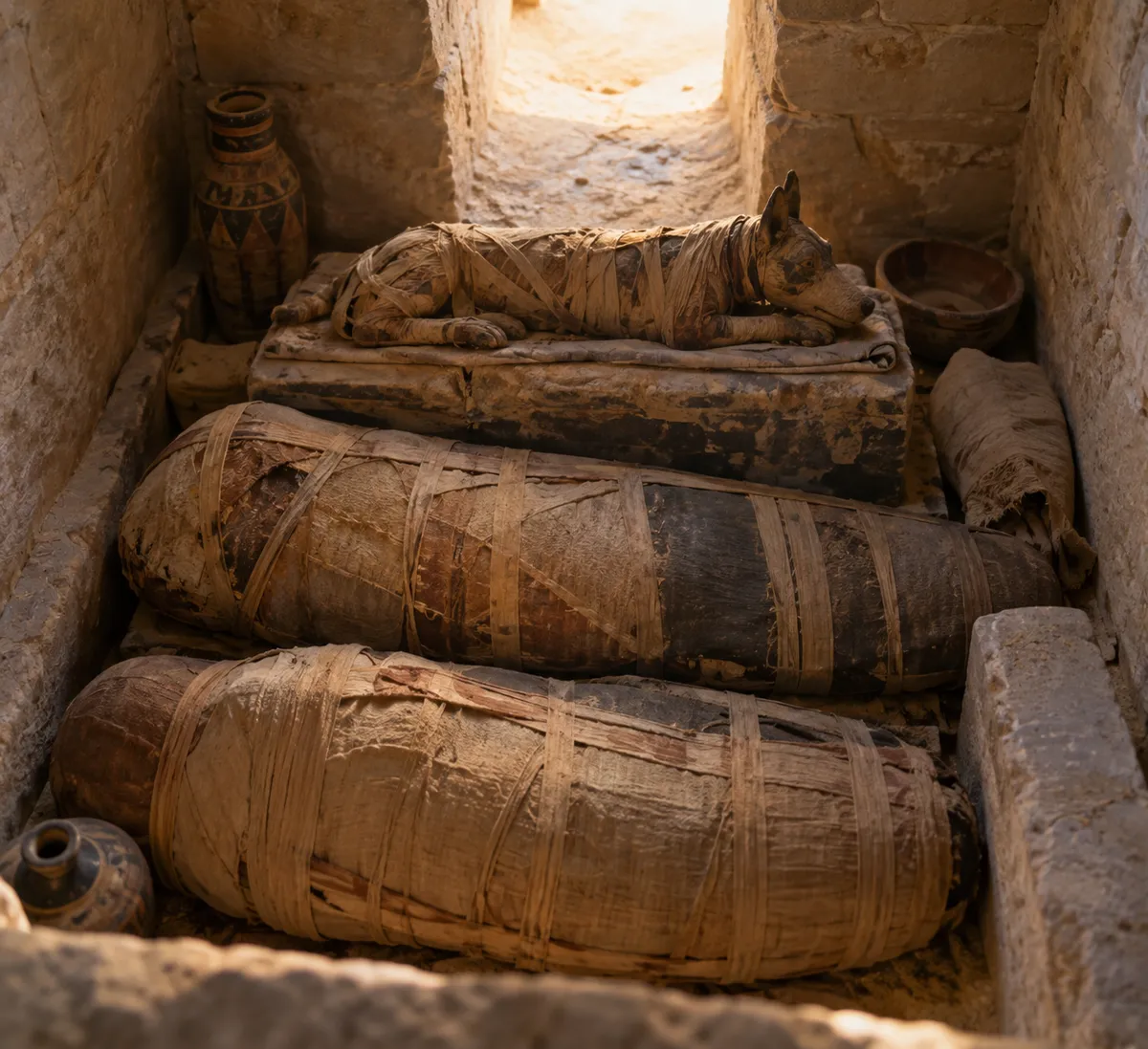
The detail most likely to stick with you: a mummified dog placed over two humans. Phys highlights it as part of the tomb's story, and it touches on something familiar, the bond between people and their animals, and how that bond might extend into beliefs about the afterlife.
We should be careful about what this proves. The source material doesn't tell us who the dog's owners were or exactly why it was positioned that way, so any single explanation is speculation. What we can say is that the placement was a choice, and it sits within a tomb where placement seems to have mattered.
How to read a "messy" burial site
You don't need to be an archaeologist to borrow the lesson. When you encounter a crowded or confusing historical space, try these steps:
- Ask what came first. Later arrangements often respond to earlier ones.
- Look for adaptation, not just accumulation. Changing practices around existing remains can signal a living tradition.
- Treat unusual placements as decisions. A dog above two humans is an arrangement someone made, not an accident by default.
- Hold off on the word "chaotic." It may say more about our expectations than about the people involved.
Why this matters beyond one tomb
The study offers a more nuanced view of Egyptian burial practice and social behavior. Over the roughly span from the Twenty-fifth Dynasty to the Ptolemaic period, the people using this chamber kept a shared understanding of how to treat the dead, even as the details evolved. That's a reminder that archaeology can reinterpret spaces that earlier observers misread.
The takeaway
Next time you see a crowded, apparently muddled site, whether in a museum photo or a documentary, look for the logic in it first. Tomb 209 suggests that what looks like clutter can be centuries of people quietly adjusting their rituals to honor those who came before.