A tiny kitchen has a brutal rule: everything you own is competing for the same few inches. So before a new gadget moves in, it should prove it deserves the room. Here is a four-question test you can run in about two minutes, using a real example from a recent small-space shopping roundup.
The example: a mug-style ice cream maker
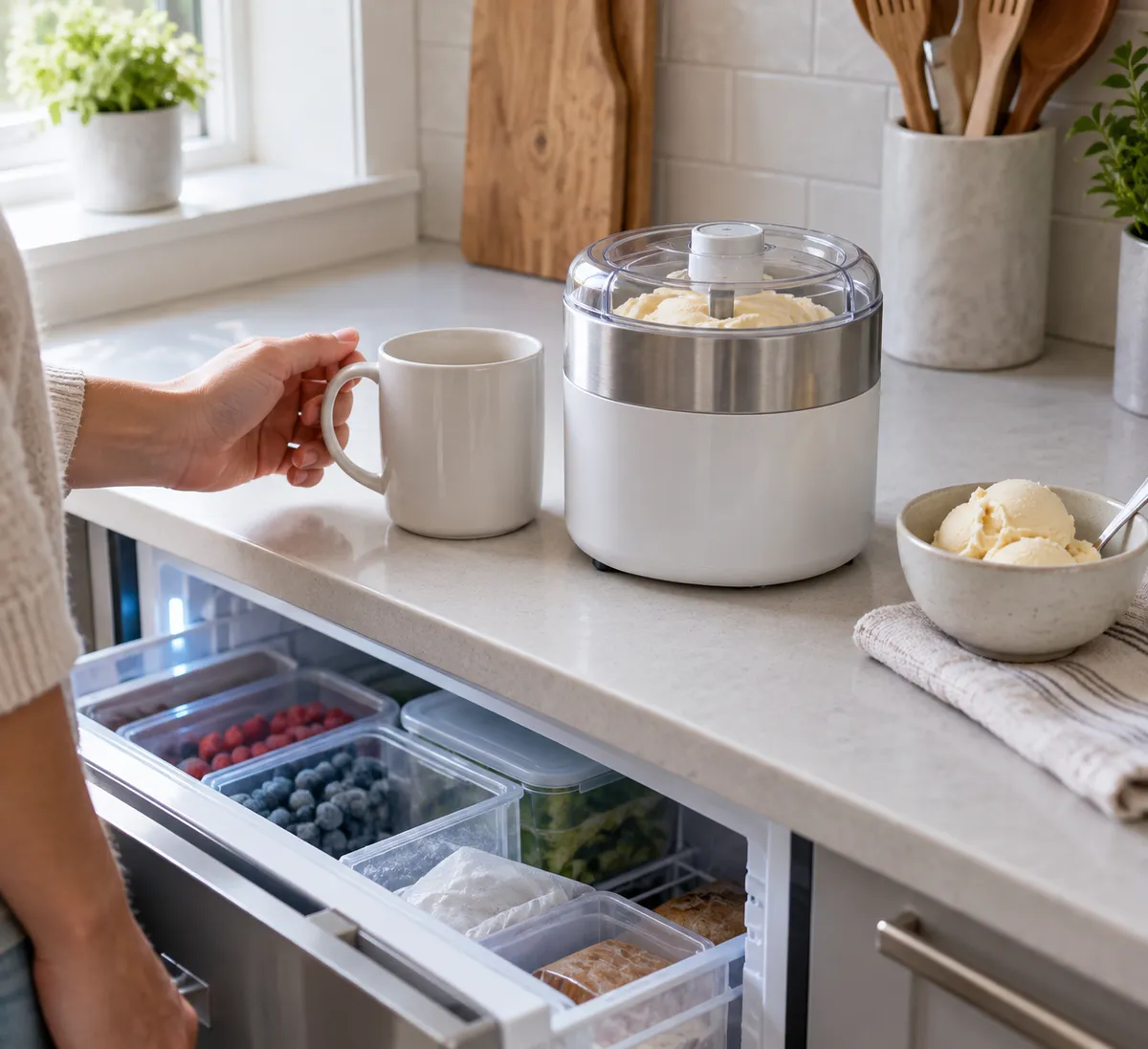
BuzzFeed's list of 35 small-space products includes a compact, mug-style ice cream maker set. Per the roundup, it's designed for easy storage and for eating straight from the container. I can only speak to what that description tells us, and I haven't tested the product. But it makes a handy case study, because it's the kind of item that sounds charming and may or may not survive a month in a studio apartment.
The appeal is easy to see. Small-space shoppers want things that feel useful without adding clutter, and a treat-yourself appliance that shrinks the usual ice cream machine down to mug size hits that spot. Novelty plus a small footprint is a tempting pitch. Now let's pressure-test it.
Question 1: Where will it live, exactly?
Don't answer "somewhere in the cabinet." Name the shelf, drawer, or freezer corner, and check that it fits there today, with your current stuff in it.
This matters most for anything that needs freezer space. If a gadget has to live in the freezer, or you'd need to chill a part before using it, measure the free spot first. A product described as easy to store still needs a home you can name before you buy.
Question 2: Does it do double duty?
The best small-space gadgets replace something or serve as their own dishware. The ice cream maker's "eat straight from the container" design is the right idea here: the thing you make it in is also the thing you eat from, so there's no extra bowl and one less item to wash.
Ask of any gadget:
- Does it replace something I already own?
- Does it double as a serving or storage vessel?
- Does it cut dishes rather than add them?
If you answer no three times, it's clutter with good marketing.
Question 3: Will you actually use it weekly?
Be honest about your habits. A gadget you'd use once a week earns space far more easily than one for a once-a-year occasion. For a dessert maker, picture a normal Thursday night. Would you really make a single serving, or would you grab a pint from the store?
A useful trick is to set a trial period. Buy it, put a date on your calendar 30 days out, and note how many times you used it. If the number is low, return it or pass it on while you still can.
Question 4: Is the fun worth the footprint?
Not everything in a small home has to be strictly functional. A little delight can be a perfectly good reason to keep something, as long as it passes the first three questions. The goal isn't to live like a minimalist monk; it's to make sure every item is there on purpose.
This is where compact novelty gadgets can win. A small, storable treat-maker costs you little space, so a modest amount of joy can justify it. A bulky one-trick machine can't make that argument.
Run the test on your own list
Take whatever's in your online cart right now and score each item out of four. Anything scoring three or more gets a spot. Anything scoring two or less goes back on the shelf, no matter how cute it looks.
If you want to go further, use the test as a way to review what you already own. Pull out the gadgets you haven't touched in six months, and see how many would pass today. The space you free up might be worth more than anything new you could buy.
The takeaway: before buying any small-space gadget, name the exact spot where it will live, and don't click purchase until you can.