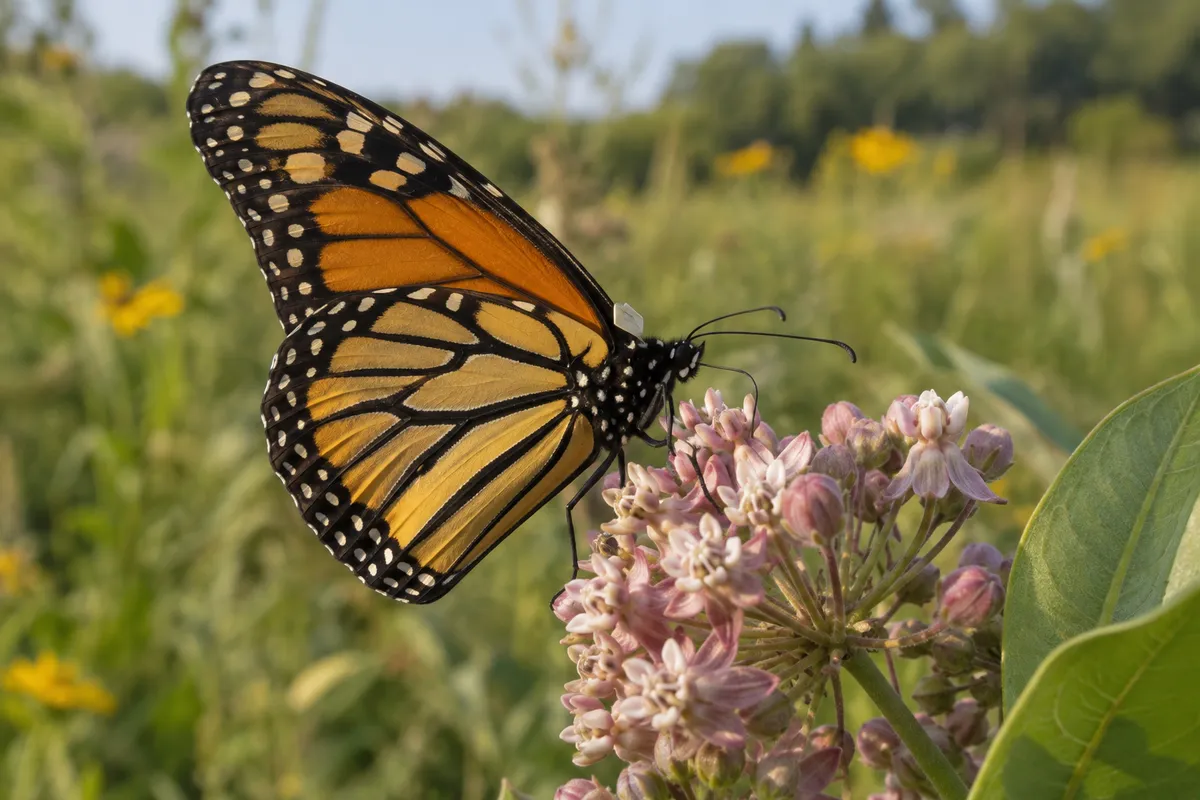
Every fall, monarch butterflies top off on nectar from Iowa's late-blooming wildflowers and then start a journey to Mexico. Scientists still can't say exactly which routes they take or how weather shapes the trip. A new Iowa State study, reported by Phys, aims to fill in those gaps by tracking 100 monarchs with the lightest tags available. By the end of this article, you'll know what the researchers are testing, why it matters, and a few things you can do about it yourself.
What the Iowa State researchers are doing
Per Phys, the team is attaching BlūMorpho tracking tags, described as the lightest available, to 100 monarchs and following them on their fall migration from North America to Mexico. The goal is to learn more about the pathways the butterflies take and how weather affects the journey.
The tracking is also meant to answer a practical question: does the way a monarch is raised change how well it survives and navigates? The study compares monarchs raised under different conditions with wild-caught ones. If rearing practices make a difference, that matters for anyone who raises monarchs, from schools to backyard hobbyists.
Why weight matters so much
A monarch is a very small traveler, and anything you attach to it has to be light enough not to slow it down. That's why the choice of tag is the heart of the story. A lighter tag means a more natural flight, which means the data reflects how monarchs actually migrate rather than how they migrate while carrying extra baggage.
The tags also make real-time tracking possible, which Phys reports can now answer long-standing conservation questions. Earlier approaches told researchers where a butterfly started and, with luck, where it was later found. Following individuals along the way is a different kind of information.
Why Iowa is such an important place to watch
The eastern North American monarch population has declined by up to 80%, according to the report. The Midwest, and Iowa in particular, is crucial for monarch production because many of the butterflies that overwinter in Mexico originate there.
Iowa has also put real work into habitat. Per the source, more than 690,000 acres of monarch habitat have been established in the state since 2015. Better migration data could show whether and how that habitat is helping, and where restoration effort would pay off most.
The indoor versus outdoor rearing question
People raise monarchs in many ways, and it's reasonable to wonder whether a butterfly raised under one set of conditions fares as well as one that grew up in the wild. The Iowa State comparison is designed to test exactly that, by tracking reared and wild-caught monarchs side by side. The results aren't in yet, so nobody can say which approach wins. What you can take from it is that the question is being studied rather than guessed at, and guidance for hobbyists may get sharper once the data arrives.
What the researchers will measure on the trip
The journey to Mexico takes about eight weeks, per the report. Over that stretch, researchers want to see how weather affects the butterflies' progress. Wind, temperature, and storms are obvious suspects, and with tags reporting on individual insects, the team can start connecting conditions to outcomes instead of relying on after-the-fact observation.
How you can take part
You don't need a lab to contribute. Phys notes that the technology enables public involvement through the Project Monarch app. If you're curious, that's the place to start for app-based participation in monarch research.
Other simple steps fit the same goal of supporting monarchs:
- Plant milkweed. Even a few plants on a porch or in a small yard add to the habitat monarchs need.
- Grow fall-blooming wildflowers. The Iowa researchers point to these as the fuel monarchs rely on before they leave, so late-season nectar counts.
- Think before you rear. If you raise monarchs, watch for the study's findings on rearing conditions and survival.
What to do next
This season, put one nectar plant in the ground or on your balcony. Monarchs are about to take an eight-week trip, and a good meal on the way is something every one of us can offer.