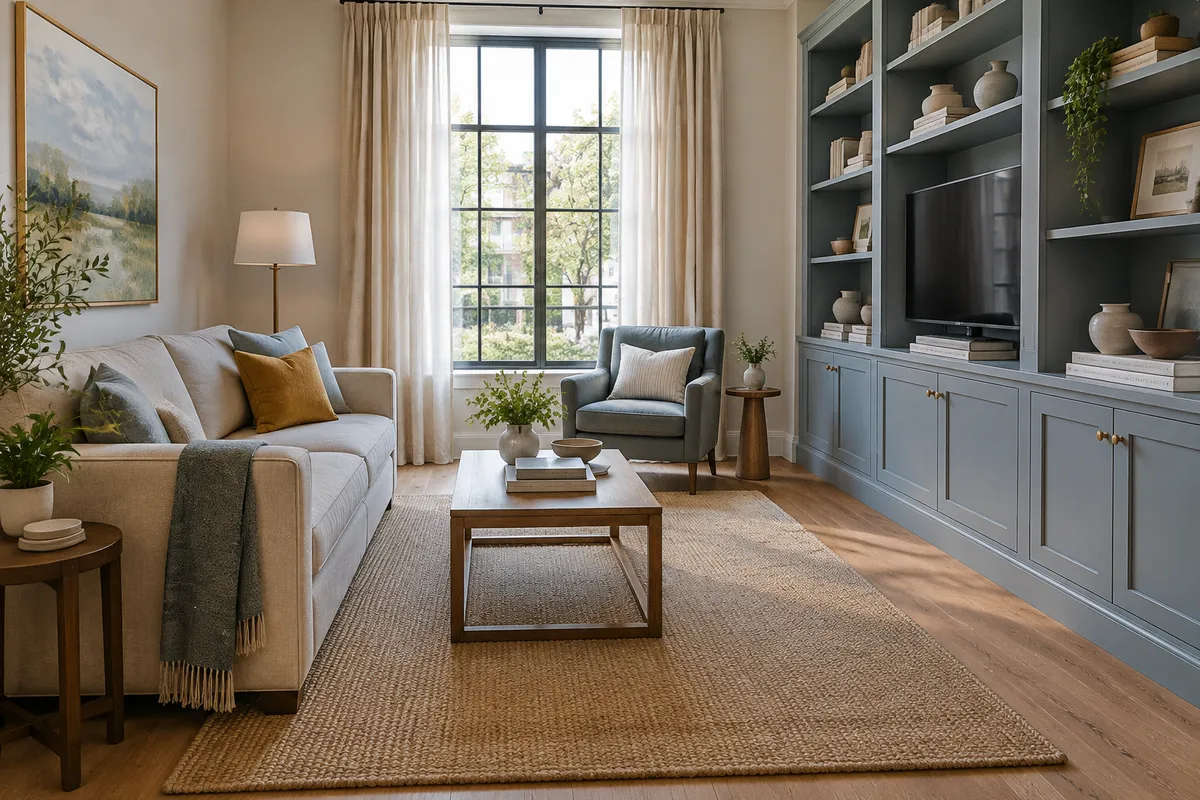
A small living room isn't automatically a cramped one. Per The Spruce, which published a list of seven easy changes for making a compact living room look larger, simple design tweaks are the key to a room that feels open, airy, and still functional. The outlet's full list of seven isn't reproduced here, so this article doesn't pretend to walk through it. Instead, it gives you a way to find what is making your own room feel tight, and a weekend method for testing fixes without renovating.
By the end, you'll have a repeatable process: spot the problem, change one thing, judge the result.
Start by Diagnosing, Not Decorating
The Spruce's premise is that small rooms feel cramped because of choices, not just square footage. That's good news, because choices can be undone. Before you buy or move anything, stand in the doorway and take a photo of the room. Photos flatten a space and make problems obvious in a way your daily familiarity hides.
Then ask three plain questions while looking at the picture:
- Where does your eye stop first? If it lands on a bulky item or a pile of clutter, that's your first suspect.
- Can you walk from the door to the seating without turning sideways?
- Does the room look like it's doing one job, or five?
These are my own diagnostic prompts, not claims from the source. They simply help you aim your effort at the biggest offender rather than redecorating everything.
Change One Thing at a Time
The appeal of the approach The Spruce describes is that these are easy-to-implement tweaks, not a remodel. That makes them ideal for testing. If you rearrange furniture, swap a few items, and add decor all at once, you won't know which move helped.
Try this order, from cheapest to most involved:
- Clear surfaces. Remove everything from coffee tables, shelves, and side tables. Put back only what you use or love.
- Rearrange. Shift furniture and see whether the room opens up. Costs nothing.
- Edit. If a piece still dominates after rearranging, consider whether the room needs it.
- Add last. Only buy something new once you know what the room is missing.
Take a new photo after each step and compare. You're essentially running your own before-and-after, which is also the most convincing way to see what's working.
Why Before-and-Afters Beat Guesswork
Small styling decisions can visually expand a room, and the difference is often easier to see than to describe. Keep your first photo and put it beside the latest one. If the second looks calmer and roomier, keep the change. If not, undo it. Nothing here is permanent, which suits renters and anyone not ready to commit to paint or new furniture.
Make the Room Work, Not Just Look Bigger
The Spruce frames the goal as a space that's open and airy but also functional. A room that looks spacious but has nowhere to set a drink or put your feet up won't feel good to live in. After each tweak, do a quick use test: sit where you normally sit, reach for the remote, set down a mug, walk to the window. If something is awkward, fix that before moving on.
Why This Matters for Apartments and Condos
More people live in apartments, condos, and compact homes, and many want affordable, low-effort ways to make those spaces feel bigger without renovating. That's the practical case for starting with free and cheap changes. You learn what your room actually needs before you spend money.
A Weekend Plan
Saturday morning: Take your doorway photo, clear every surface, and take another.
Saturday afternoon: Rearrange furniture one way, photograph it, then try a second layout and compare.
Sunday: Decide what to keep, remove, or replace. Hold off on buying anything until you've lived with the new setup for a few days.
For the full list of seven specific tweaks, read the original piece at The Spruce. Then pick just one, try it tonight, and take the photo.