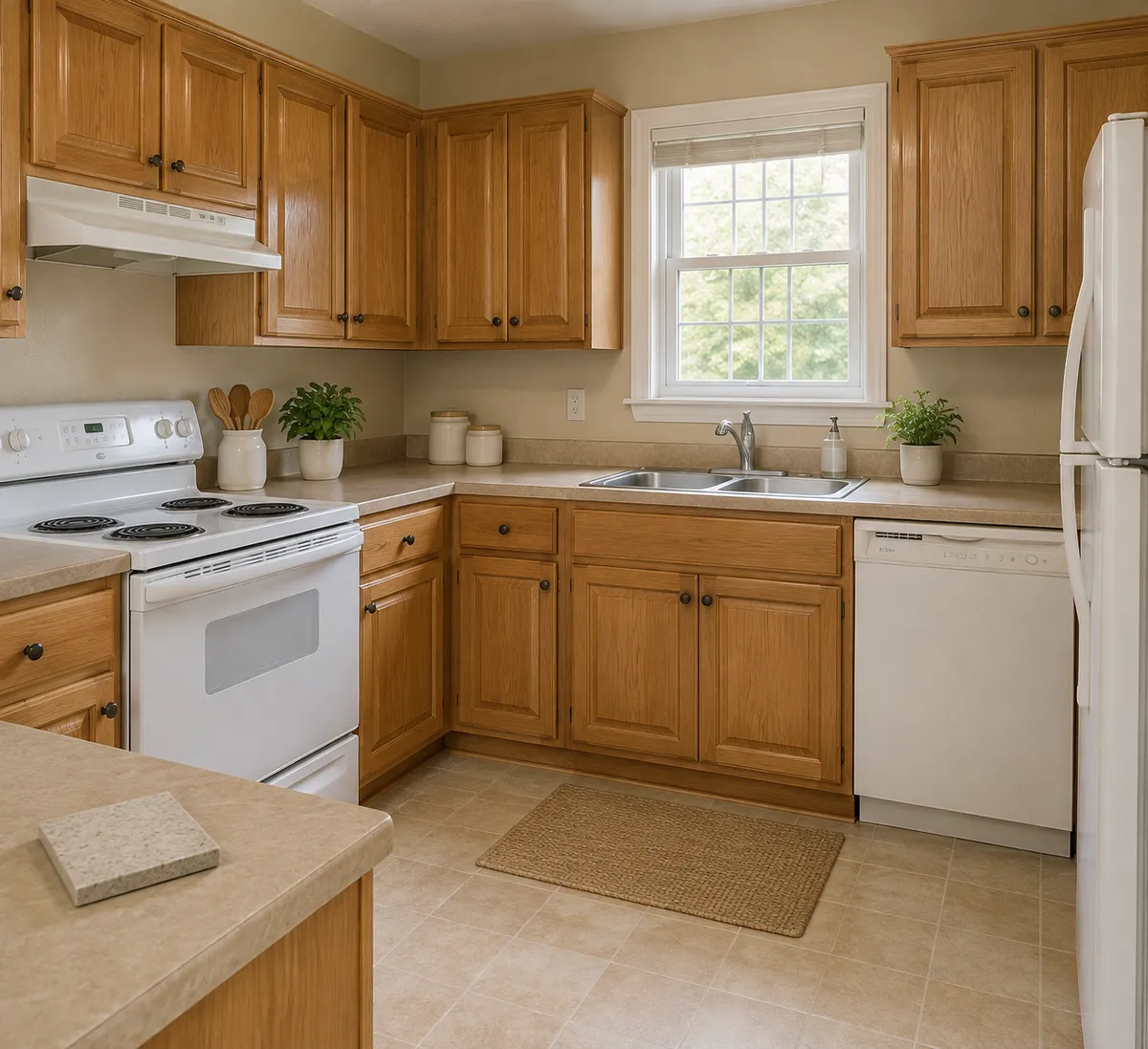
If your kitchen looks tidy but feels a bit like a showroom, you're not alone. Veranda recently rounded up 12 kitchen trends designers expect to be everywhere in 2027, and the common thread is a move away from sterile minimalism toward warmth, craftsmanship, and what the piece frames as practical luxury.
You don't need a full renovation to use the idea. Below, the trends are sorted into three goals you can act on: hide the mess, add warmth, and make the room a place people want to stay. Where I go beyond what Veranda reported, it's my own suggestion, and I'll say so.
Goal 1: Hide the clutter
The biggest shift Veranda describes is toward kitchens that conceal the busy parts of cooking. As open-concept living continues, kitchens are more visible, so homeowners want them calm and easy to maintain.
The scullery
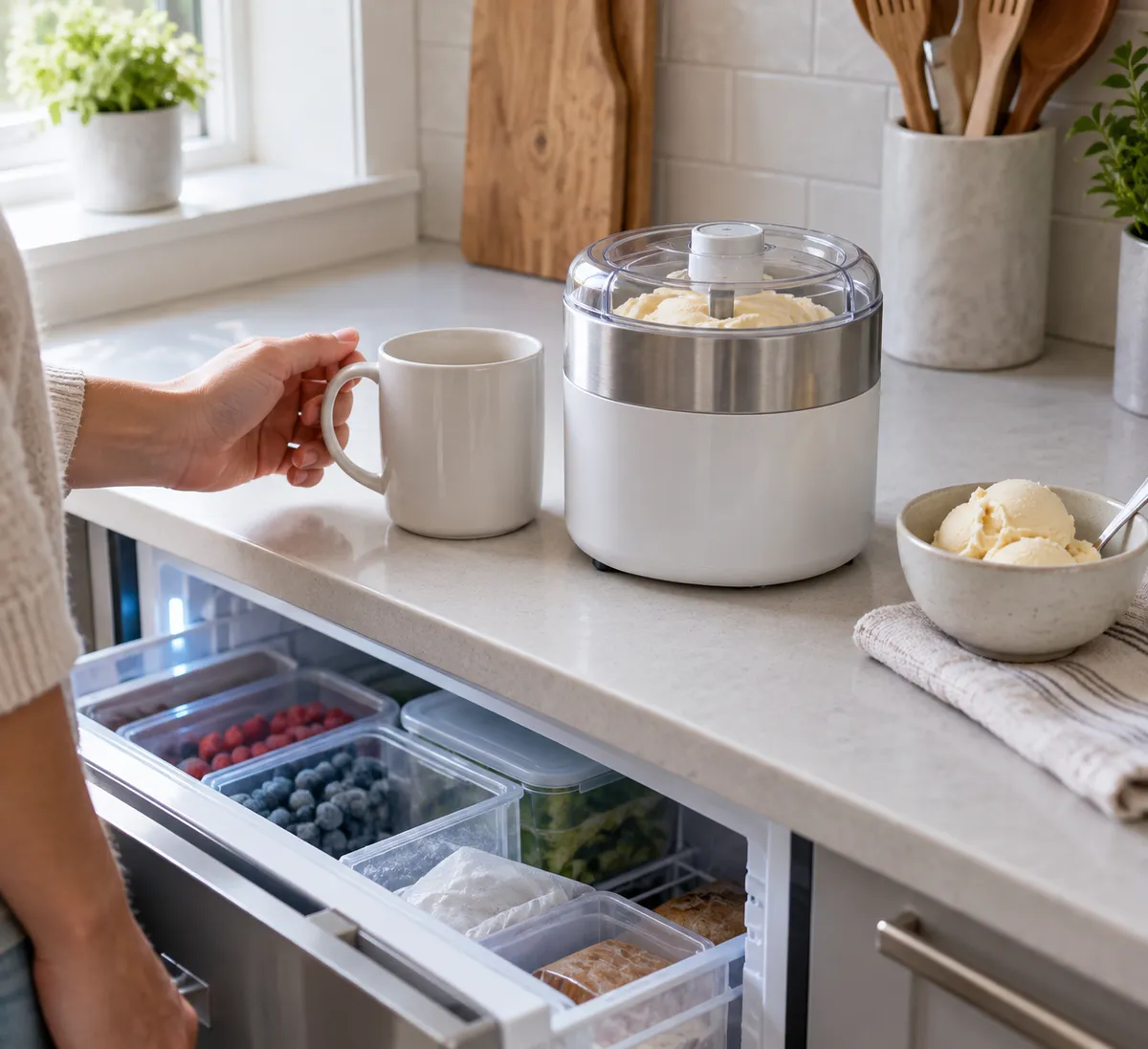
The first trend on the list is the rise of the scullery, a secondary workspace tucked behind the main kitchen. The idea is that the messy work happens out of sight while the main room stays polished. Few of us have room for a true scullery, so here is my own small-space take: a pantry, a closet, or even a corner with a door can serve as a hidden zone for small appliances and dirty dishes.
Invisible kitchens
Veranda also lists "invisible kitchens," where the working parts blend into the surrounding space. In practice, that points toward panel-front appliances and closed storage over open shelving packed with gear. A cheap version: clear the counters down to two or three items you use daily, and give everything else a closed home.
Smart tech that doesn't look high-tech
The twelfth trend is smart kitchens that don't look high-tech. The technology is there, but it's integrated rather than showy. If you're adding gadgets, favor ones that disappear into cabinetry or match your finishes over ones that announce themselves on the counter.
Goal 2: Add warmth with materials
This is where most of the trends land, and it's the most useful category if you're replacing the all-white look.
Richer wood tones
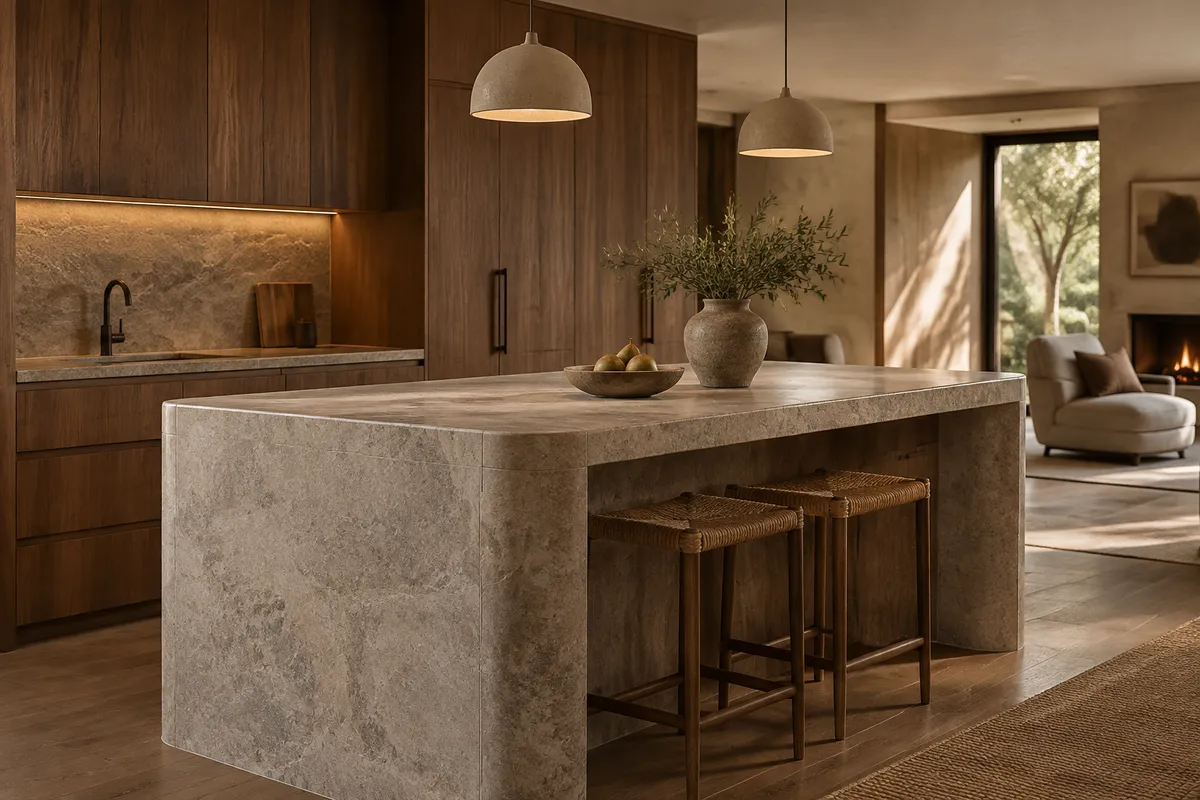
Designers are pointing toward deeper, richer wood. You can test the direction cheaply with a wood cutting board, a stool, or open-shelf accents before committing to cabinetry.
Natural materials and craftsmanship
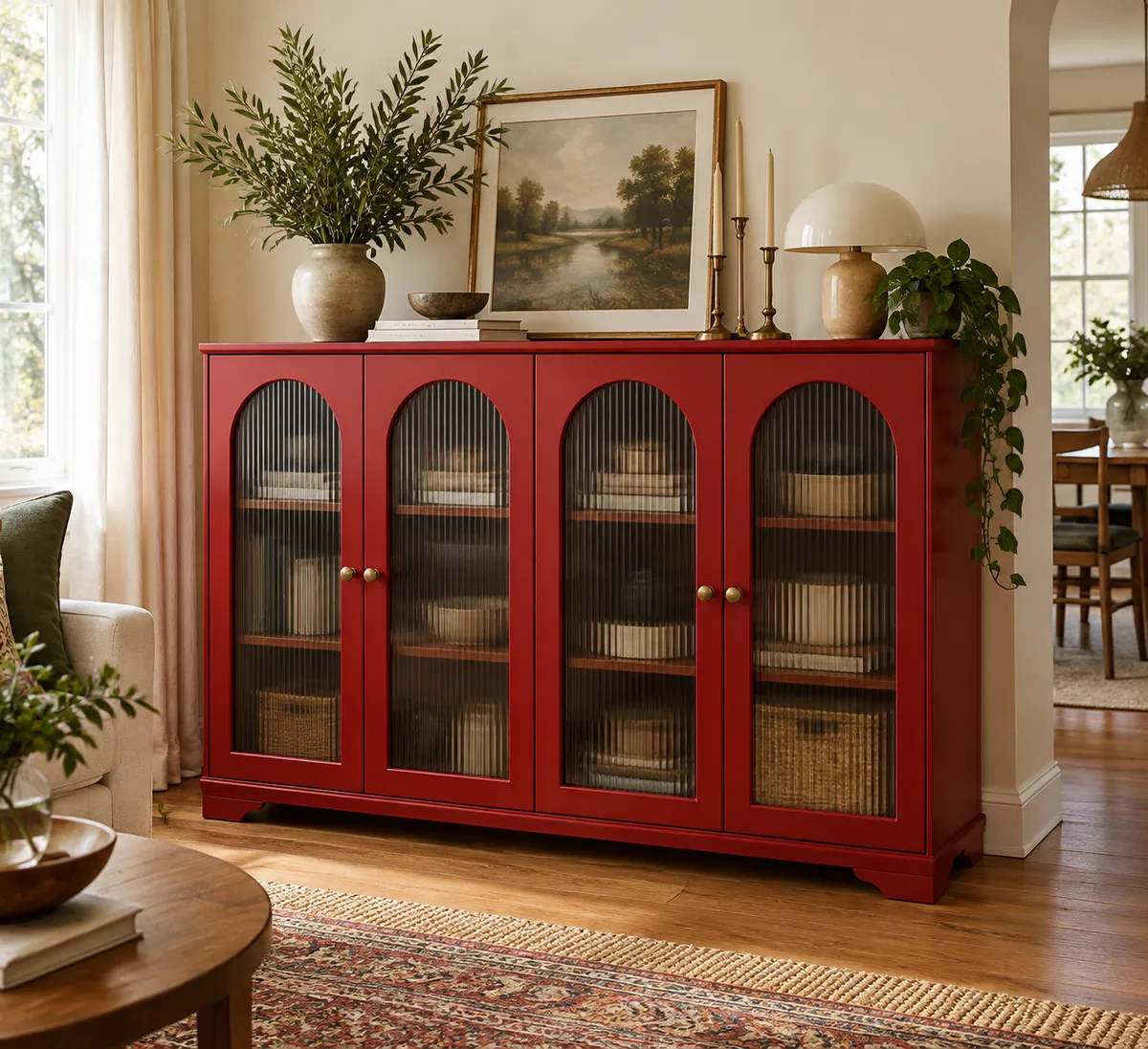
The list also champions natural materials and visible craftsmanship. Think handmade ceramics, woven textures, and pieces that show the maker's hand. These are easy to layer in without construction.
Statement stone
Stone gets its own spot as a bold feature rather than a quiet backdrop. If a full slab is out of budget, my suggestion is to use stone on a smaller surface, like a bar top or a single section of counter, to get the same feel.
Tonal kitchens
Tonal kitchens, built from variations of a single color family, round out the palette advice. The appeal is calm: fewer contrasts mean less visual noise. A practical way to try it is to paint walls and cabinets in related shades rather than matching the whole room exactly.
Goal 3: Add personality and make it a place to linger
The remaining trends are about details that make the kitchen feel designed rather than merely functional.
Creative millwork
Millwork, meaning the trim, paneling, and carved or shaped woodwork, is getting more creative. Even adding simple paneling to the side of an island can change the character of the room.
Decorative range hoods
The range hood, once a purely functional piece, is becoming a decorative focal point. If yours is a plain steel box, a custom surround or wrapped finish is the kind of upgrade this trend suggests.
Artistic tile backsplashes
Backsplashes are moving toward the artistic. Because a backsplash covers a relatively small area, it's one of the more manageable places to spend on something distinctive.
Islands as gathering tables
Kitchen islands are being treated as gathering tables, not just prep surfaces. That means seating and comfortable proportions that invite people to sit and stay. Consider whether your island has room for stools that people can actually use for a full conversation or a meal.
Kitchens that feel like living rooms
This trend ties the rest together: kitchens designed as polished living spaces rather than purely utilitarian rooms. Lamps, art, rugs where practical, and comfortable seating all push in that direction.
A realistic order of operations
This ordering is my own suggestion, not Veranda's. If you're planning gradually:
- Clear and conceal. Reduce counter clutter and add closed storage first. It costs the least and changes the feel immediately.
- Warm up the finishes. Paint, wood accents, and natural textures come next.
- Spend on one feature. Pick a single standout, whether tile, stone, or a range hood, rather than spreading money thin.
- Save big structural changes for last. A scullery or a reworked island is a larger commitment, so live with the lighter changes first.
The takeaway
You don't have to adopt all twelve trends. Pick the one that solves your biggest daily annoyance, whether that's clutter or a cold-feeling room, and start there this weekend.