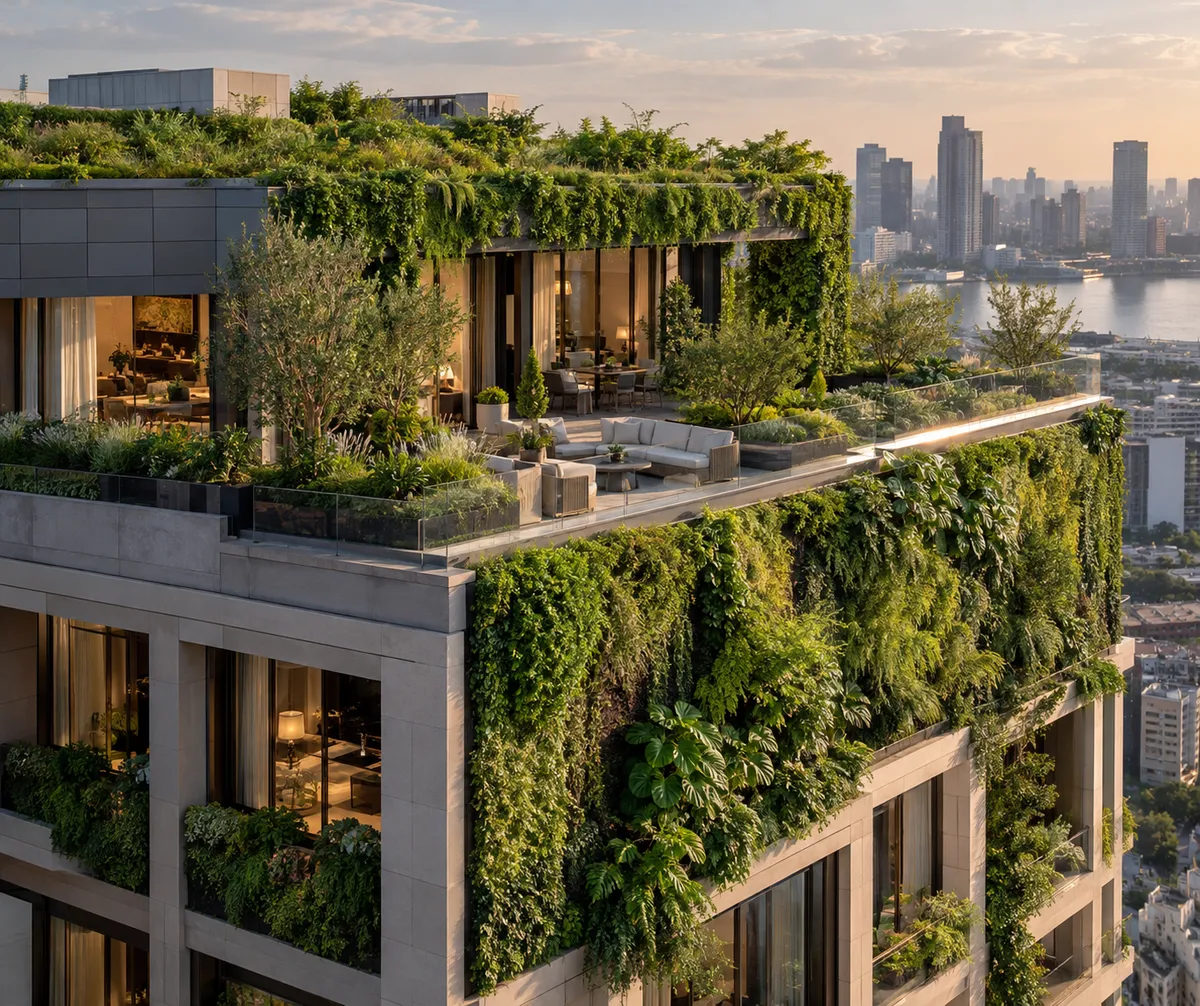
Next time you walk into a hotel lobby and find a wall of living plants, you're looking at more than decoration. You're looking at a business decision. By the end of this piece, you'll know why luxury hotels are making that decision, what they're reportedly aiming to get back, and how to tell real green strategy from a pretty backdrop.
The prompt for this look is a Forbes piece in which the writer interviewed seven hotels about what drove their investment in green roofs and living walls, and what those hotels gained in return. I can only work from the outline of that reporting, so this article doesn't repeat hotel-by-hotel figures. Instead it focuses on the logic that ties the story together: green infrastructure is moving from aesthetic trend to business strategy.
The two-sided payoff: what guests see, what hotels bank
A living wall does two jobs at once, and that's the appeal.
The guest-facing side. Greenery is a visible signal. Per Forbes, the idea behind biophilic design (building nature into a space) is framed as both a sustainability move and a guest-experience upgrade. A guest doesn't need a sustainability report to feel something in a lobby filled with plants. It reads as calm, considered, and different from the next hotel down the street.
The behind-the-scenes side. The same greenery is positioned as a way to reduce heat, support biodiversity, and strengthen brand value. Those are the kinds of returns an executive can put in a planning meeting, which is why this is increasingly a strategy conversation rather than a landscaping one.
Why luxury hotels in particular
Luxury hospitality faces an unusual squeeze. Guests expect a premium, memorable stay, and they also increasingly expect proof that a property takes environmental responsibility seriously. Those two demands can pull in opposite directions: lavish often means resource-hungry.
Green roofs and living walls offer a way to square that circle. They're visible, so they communicate effort. They're also physical, so they're harder to dismiss than a line in a brochure. That's the sense in which they work as differentiators: a hotel can point to something guests can actually see and touch.
Three things a green roof or wall can do
Based on the benefits Forbes' framing highlights, here's what the investment is meant to deliver.
1. Reduce heat
A roof or wall covered in plants is a different surface from bare concrete or metal. Heat reduction is one of the named benefits, and for a building that spends heavily on keeping guests comfortable, it's an obvious thing to want.
2. Support biodiversity
Planted roofs and walls create habitat in places that would otherwise offer none, particularly in dense urban settings. For a hotel, that turns an unused rooftop into something with ecological value.
3. Strengthen the brand
This is the least tangible and possibly the most important to the people signing the checks. A green feature gives a hotel a story to tell, and a way to look different in a crowded luxury market. My read, not a claim from the reporting: when every high-end property has a spa and a good restaurant, a distinctive, visibly sustainable feature starts to carry real weight.
How to read a hotel's greenery as a guest
You can use this trend when choosing where to stay. A few practical checks:
- Look up, not just in. A living wall in the lobby is easy to photograph. Ask whether the property also has a green roof, since that's where the heat and biodiversity benefits would come from.
- Ask what it does. A good front desk or concierge team should be able to say something specific about the planting: what it's for, who maintains it, whether it's open to guests.
- Check the booking page. Properties proud of this kind of investment tend to mention it. If the website says nothing, that's information too, though not proof of anything.
- Notice the plants themselves. Healthy, well-kept greenery suggests the hotel is committed to maintaining it. Struggling plants suggest decoration without follow-through. That's a judgment call from your own eyes, not a rule.
Why this isn't just a luxury story
The hotels in Forbes' reporting are at the high end, where budgets allow for ambitious installations. But the underlying idea scales down. Plants on a surface can change how a space feels and how it handles heat, whether that surface belongs to a five-star resort or your own building. If luxury hotels are treating it as worth the investment, it's a sign the idea has moved well past novelty.
What to take from it
The next time you see a wall of plants in a hotel lobby, treat it as a prompt for one question: is this the front of something bigger? Look for the roof, ask the staff what the greenery does, and let the answer shape where you book next.